Unit 6: It's your turn.
Personal Profile
teacher: Let’s fill in your profile. first, are you male or female?
student: I’m male.
teacher: What’s your first name?
student: My first name is Leon.
teacher: Do you have a middle name?
student: My middle name is Matthias.
teacher: Do you have a nick name?
student: Yes—“Leo.”
teacher: What’s your second name?
student: My second name is Wild.
teacher: How old are you?
student: I’m 15 years old.
teacher: What’s your place of birth?
student: I was born in Basel, Switzerland.
teacher: When were you born?
student: I was born on May the fifteenth, 2010.
teacher: What’s your nationality?
student: I’m Swiss.
teacher: Where do you currently live?
student: I live in Rothrist.
teacher: What’s your contact number?
student: My contact number is 041 79 456 23 10.
teacher: What’s your email address?
student: My email address is [email protected]
teacher: what are your parents full names?
student: My parents are called Anna Wild and Markus Wild.
teacher: What are the occupations of parents?
student: Anna is an architect; Markus is a chef.
teacher: Where do you attend school?
student: I attend the secondary school in Rothrist.
teacher: What’s your current grade of school?
student: I go to 10th grade.
teacher: What courses do you take?
student: I take English, arts, P.E, German and mathematics.
teacher: Finally, do you have any special skills or interests?
student: I love sketching, and playing midfield in football.
In the picture
Let's start talking about sports:
- What is your favourite sport, and why?
- Who is your favorite athlete?
- Do you prefer playing sports or watching sports?
- What sports do you play at school?
- What sport would you like to learn, and why?
- What do you think is the most exciting sport to watch?
- Have you ever attended a sports event? Which one?
- Do you have a favourite sports team?
- Who is the best athlete in the world, in your opinion?
- What sports are popular in your country?
- Do you prefer team sports or individual sports? Why?
- Have you ever tried an unusual or extreme sport?
- Do you think it's important to do sports regularly? Why or why not?
- What sports equipment do you own at home?
- Do you prefer indoor sports or outdoor sports?
- Who in your family likes sports the most?
- What sport do you think is easiest to learn?
- Do you like watching sports on TV or online?
- Can you name a sport you don’t understand very well?
- Would you like to become a professional athlete someday? Why or why not?

Play, do, go
Use «play» with:
Ball games or competitive team sports (especially with a ball or similar object):
-
play football, play basketball, play tennis, play hockey, play golf, play volleyball, play chess
Use «go» with:
Activities ending with -ing (often outdoor sports or individual leisure activities):
-
go skiing, go hiking, go swimming, go cycling, go running, go climbing, go sailing, go fishing, go jogging
Use «do» with:
Sports or activities not involving balls or team play, often individual exercises or martial arts:
-
do yoga, do gymnastics, do judo, do karate, do aerobics, do athletics, do boxing, do ballet, do pilates
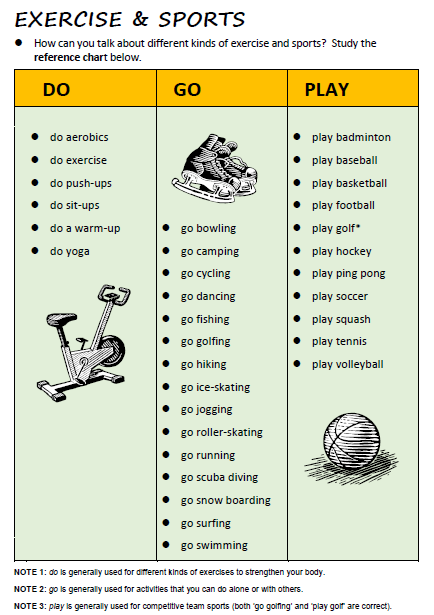
- Sports with do, play or go (LearningApp)
More exercises:
- https://learnenglish.ecenglish.com/lessons/play-go-do (10 choices)
- https://www.anglaisfacile.com/exercices/exercice-anglais-2/exercice-anglais-85753.php (15 gaps)
- https://www.bbc.co.uk/learningenglish/course/eiam/unit-1/session-18 (video, exercise)
A person who plays the sport
You can usually add –er when:
- The sport name is short, often one word, and commonly used.
- The name of the sport sounds natural with “-er” added.
footballer, cricketer, tennis player, golfer, boxer, skier, ...
You don't add -er when:
- The sport name is more than one word (e.g. table tennis).
- It already sounds awkward with “-er.”
- There's a more natural alternative like "player" or "athlete."
judoka, kareteka, athlete, surfer, diver, biathlete, equestrian, gymnast, ...
Likes and dislikes / Love it or Hate it
- A1: Likes and dislikes (grammar, quiz, gap fill)
- A2+: Love it or hate it (vocabulary, quiz)
- A2+: Do you enjoy cooking (vocabualry, quiz)
Vocabulary
Wordlist
- BFS A2 Unit 6 all (Quizlet: term - term)
Listen to Vocabulary
Crosswords
- A2: https://www.learnenglish.de/games/crossword15/sportsxword.html (17 sports)
Sport
- B1: https://test-english.com/vocabulary/b1/sport-b1-english-vocabulary/(Gap Filling)
A to Z
What sport is it?
Sport Locations
|
# |
Sport |
Most important equipment |
typical location |
|
1 |
American football |
ball, helmet |
football field |
|
2 |
badminton |
shuttlecock, racket |
badminton court |
|
3 |
baseball |
bat, glove |
baseball field |
|
4 |
basketball |
ball, basket |
basketball court |
|
5 |
bowling |
bowling ball, pins |
bowling alley |
|
6 |
chess |
board, chess pieces |
tournament hall |
|
7 |
cycling |
bicycle, helmet |
road |
|
8 |
golf |
golf clubs, tees |
golf course |
|
9 |
horse-riding |
horse, saddle |
paddock |
|
10 |
ice hockey |
puck, hockey stick |
hockey stadium |
|
11 |
ice skating |
ice skates, gloves |
ice rink |
|
12 |
sailing |
boat, sail |
lake |
|
13 |
skateboarding |
skateboard, helmet |
skate park |
|
14 |
skiing |
skis, ski poles |
ski slope |
|
15 |
snowboarding |
snowboard, boots |
fun park |
|
16 |
surfing |
surfboard |
ocean |
|
17 |
swimming |
swimsuit, goggles |
swimming pool |
|
18 |
table tennis |
bat, ball |
table tennis hall |
|
19 |
tennis |
racket, ball |
tennis court |
|
20 |
volleyball |
volleyball, net |
volleyball court |
Writing Assignment: How do you play / do some of these sports?
Write a short defintion of a certain sport. Include
- the number of players
- the location
- the gear you need
Badminton
A racquet sport played by either two players (singles) or two pairs (doubles). Played on a court divided by a net with racquets and a shuttlecock. You play a game of badminton.
Golf
Usually played by individuals, golf is played on a golf course, using several types of golf clubs and a golf ball. You play a game of golf or a round of golf.
Tennis
A racquet sport played by either two players (singles) or two pairs (doubles). Played on a court divided by a net with racquets and a tennis ball. You play a game of tennis or a tennis match.
Sports Categories
Sports can be categorized in several ways depending on how they are played, their environment, or the skills they require.
- net sports: volleyball, tennis, badminton, pickleball
- obstacle sports: ninja warrior, parkour, tough mudder
- target sports: archery, darts, shooting, bowling, golf
- air sports: skydiving, hang gliding, paraglidking, ...
- wind sports: kitesurfing, windsurfing, sailing, kite flying, ...
- sand sports: beach volleyball, beach soccer, desert rally racing, ...
- endurance sports: marathon, triathlon, biothlon, ...
- water sports: sailing, rowing, kiteboarding, ...
- racing sports: formula 1, motorcycle racing, bicycle racing, ...
- extreme sports: skydiving, rock climbing, base jumping, bungee jumping, freestyle skiing, cliff diving, ..
- combat sports: judo, karate, kung fu, wrestling, sumo, kickboxing, ..
- ....
Sports you can do in Switzerland
winter sports
- skiing
- snowboarding
- cross-country skiing
- ice skating
- ice hockey
- sleding
- bobsleigh
- snowshoeing
- ski jumping
- curling
- polo
mountain sports
- hiking
- alpine climbing
- trail running
- mountain biking
- paragliding
- hang gliding
- canyoning
- paintball
- golfing
- archery
cycling
- mountain biking
- road cycling
- e-Biking
water sports
- swimming
- diving
- stand-up paddleboarding
- kayaking
- canoeing
- sailing
- windsurfing
- rafting
- rowing
- biathlon
- triathlon
indoor sports
- soccer
- table tennis
- fencing
- bowling
- tennis
- basketball
- volleyball
- badminton
- field hockey
- judo / karate
- shooting
typical Swiss sports
- Swiss wrestling (Schwingen)
- hornussen (between baseball and golf)
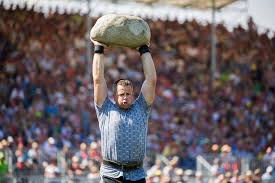
- stone throwing (Steinstossen)
Reading
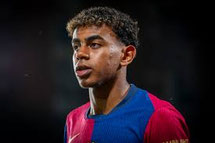
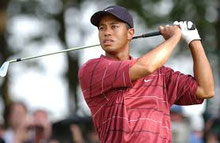
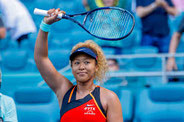
Being a famous sportsman or sportswoman

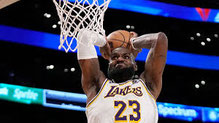

Advantages of Being a Professional Athlete:
-
Good physical health
🏃 You train daily, which keeps your body strong and fit. -
Doing what you love
❤️ You turn your passion into a career. -
High earnings (in some sports)
💰 Top athletes can earn a lot from salaries, sponsorships, and competitions. -
Travel opportunities
✈️ You may travel the world for matches, training, and events. -
Fame and recognition
🌟 You can become a role model or public figure. -
Teamwork and discipline
💪 You learn to work hard, stay focused, and support others. -
Early career start
📈 Many athletes begin young and succeed early in life. -
Scholarships or school support
Disadvantages of Being a Professional Athlete:
-
Injury risk
🤕 Injuries can end your career or cause long-term problems. -
Short career span
⏳ Most athletes retire young, often by age 30–35. -
Pressure and stress
😓 You face pressure to win, stay fit, and meet public expectations. -
No guaranteed success
🎯 Many try, but only a few make it to the top level. -
Strict lifestyle
🍽️ You may have limited social life, strict diets, and tough schedules. -
Mental health challenges
🧠 The pressure and competition can lead to anxiety or burnout. -
Financial instability (for some)
📉 Not all sports pay well, and income can stop after retirement. -
Less time for school or hobbies
📚 Sports training can take time away from education and personal life.
- A1: What do you do with your free time? (7 questions)
Esl fast Level 2 (Easy, 100 readings)
- A school scoccer player
- Becoming a skilled horse rider
- Going to a baseball game
- Horse Riding
- Learning to play baseball
Level 3 (medium, 100 readings)
Listening
- A1: Sports and exercises (8 questions)
- A2: How to play carrom (6 questions)
- A2+: Disc Golf (5 questions)
Esl fast Level 3 (very easy, 110 listenings)
Level 4 (easy)
Level 5 (more difficult)
Easy Conversations: Sports
- https://www.eslfast.com/easydialogs/sports.htm (12 short texts)
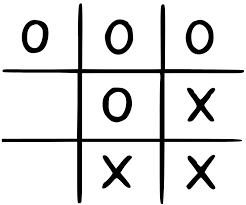
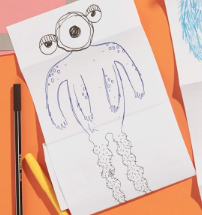
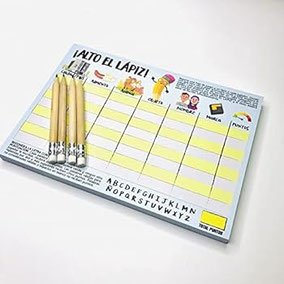
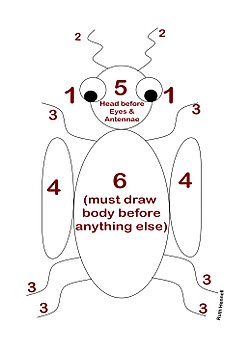
Paper and Pencil Games (wikiHow, Triple S Games)
Objective:
Choose a less famous pencil and paper game (not Tic-Tac-Toe, Hangman, or Dots and Boxes). Research or invent a unique one and write a short game plan that includes the following:
📝 Game Plan Template
🎯 Name of the Game:
(Choose a real or invented game with a creative name)
📦 Materials Needed:
-
Pencil or pen
-
Paper
-
(Optional: ruler or colored pens)
👥 Number of Players:
(Example: 2 players, or 3–5 players if it works)
📏 Rules of the Game:
-
Step-by-step instructions on how to play
-
How a player wins
💡 Tips & Strategies:
-
How to think ahead, outsmart your opponent, or improve your chances
Famous games
- Tic Tac Toe:
-
- https://www.youtube.com/watch?v=USEjXNCTvcc (Video)
- https://www.wikihow.com/Play-Tic-Tac-Toe (Game Rules)
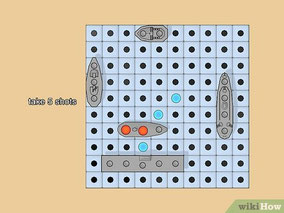
- Battleship:
- Dots and Boxes:
-
- https://www.youtube.com/watch?v=hQdQWxQk8_A (Video)
- https://www.wikihow.com/Play-Dots-and-Boxes (Game Rules)
- Scattergories/Tutti Frutti / Stand, Land, Fluss:
-
- https://www.youtube.com/watch?v=BPDXeMC12Bg (Video)
- https://www.wikihow.com/Play-Scattergories (Game Rules)
- Dots and Boxes:
-
- https://www.youtube.com/watch?v=hQdQWxQk8_A (Video)
- https://www.wikihow.com/Play-Dots-and-Boxes (Game Rules)
Less famous games
- Join five: https://www.youtube.com/watch?v=jvqL4XjpSPw (conneting dots)
- Paper Soccer: https://www.youtube.com/watch?v=MFHfR0XX3X8
- Sim: https://www.youtube.com/watch?v=U9R32UsBNN4 (no triangles, please)
- Sprouts: https://www.youtube.com/watch?v=ahaoHXCIL9c
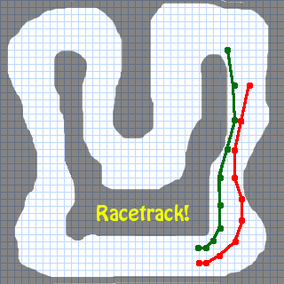
- Racetrack: https://www.youtube.com/watch?v=8se6d1VlEBQ
Grammar
can/can't for ability
- https://www.englisch-hilfen.de/en/exercises/modals/can2.htm
- https://www.englisch-hilfen.de/en/exercises/questions/can.htm
- https://www.englisch-hilfen.de/en/exercises/questions/can3.htm
- https://agendaweb.org/exercises/verbs/can/can-cant.htm
A1
- https://test-english.com/grammar-points/a1/can-cant/ (3 exercises)
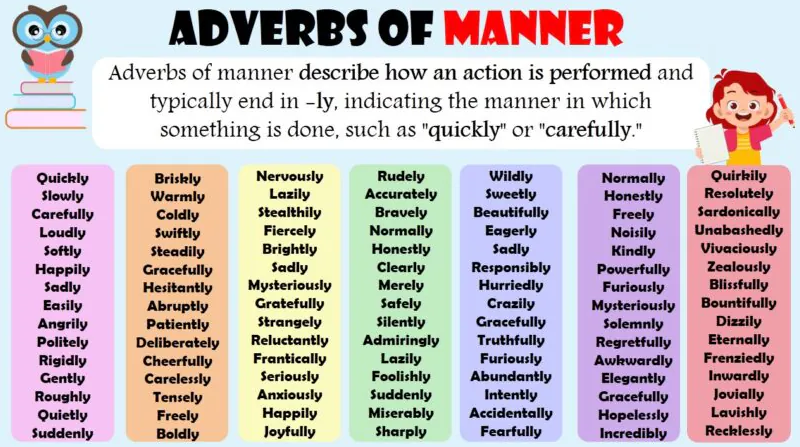
Adverbs of Manner
Rules
- General rule: In most cases, an adverb is formed by adding -ly to an adjective: cheap - cheaply
Special rules
- If the adjective ends in -y, replace the y with i and add -ly: easy - easily
- If the adjective ends in -able, -ible, or -le, replace the -e with -y: terrible - terribly
- If the adjective ends in -ic, replace it with -cally: economic - economically
- irregular adverb:
-
- good - well (not goodly)
- one form
-
- late - late
- hard -hard
- fast - fast
- early - early
- high - high
Remember this:
- She often arrives late to class, but she’s been getting better lately.
- They worked hard all week, but they hardly made any progress.
- The drone flew high above the field, and the pilot was highly praised for his skills.
- He is a good singer, and he performs very well on stage.
Easy exercises:
https://www.englisch-hilfen.de/en/exercises/adjectives_adverbs/adverb_form.htm
https://lingua.com/english/grammar/adverbs/
more difficult exercises:
https://www.learn-english-today.com/lessons/lesson_contents/exercises/adverb-gapfill1.html
https://www.ego4u.com/en/cram-up/grammar/adjectives-adverbs/adverbs/exercises
https://www.englisch-hilfen.de/uebungen/adjektive_adverbien/bildung.htm
Have to / Don't have to
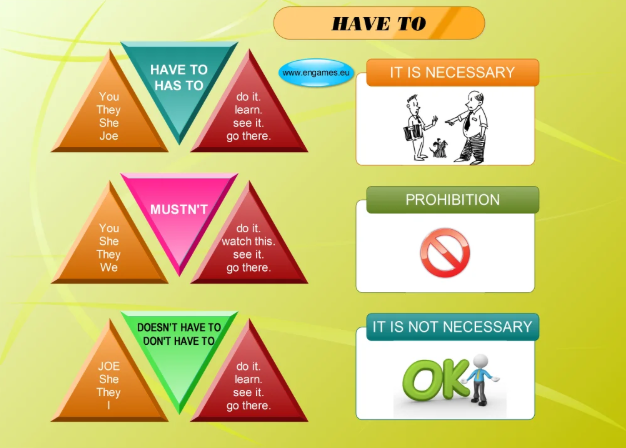
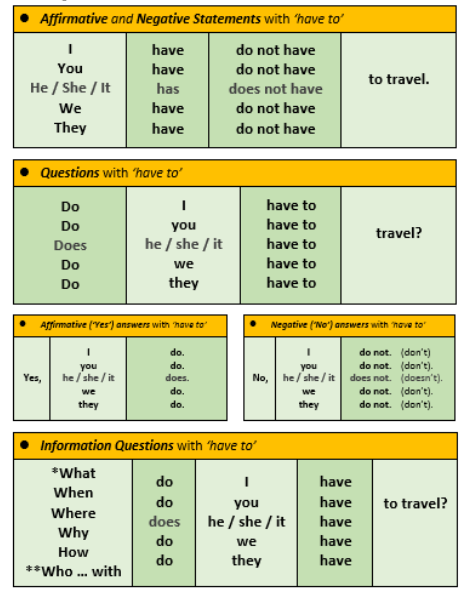
https://www.englisch-hilfen.de/en/exercises/tenses/do_not_have_to.htm
https://www.myenglishpages.com/grammar-exercise-modals-have-to-vs-dont-have-to/
https://englishzilla.com/have-to-affirmative/
https://englishzilla.com/have-to-negative/
https://englishzilla.com/have-to-questions/
https://englishzilla.com/have-to-random-exercise/
https://englishzilla.com/have-to-affirmative-multiple/
https://englishzilla.com/have-to-negative-multiple/
https://englishzilla.com/have-to-questions-multiple/
https://www.englishexercises.org/makeagame/viewgame.asp?id=12171
https://www.liveworksheets.com/worksheet/en/english-second-language-esl/836401
https://english-practice.net/have-to-dont-have-to-english-grammar-exercises-for-a1/
https://www.focus.olsztyn.pl/en/have-to-do-not-have-to-exercises.html
Life Skills
Entourage: The team behind the champion
Players often thank their team immediately after a victory, both publicly and again behind closed doors, and it’s commonplace to hear a player congratulate not only their opponent, but their opponent’s team who helped them get to that position.
A dedicated support team is now the status quo, especially among the top players who can afford to travel with a full-time staff.
In the year 2016, for example, Murray is joined by:
- wife
- parents
- coach
- assistant coach
- hitting partner
- fitness specialist
- physio /chiropractor
- mental coach
- strength and conditioning coach
- managing director
- sponsor chief
- publicist
- nutritionist
- bodyguard
- ...
Some players have more than 40 people in their entourage.
Speaking
Likes and Dislikes
Ask your partner:
-
What sport do you like playing?
➡️ “I like playing football.” -
What sport do you love watching on TV?
➡️ “I love watching basketball.” -
Is there a sport you don’t like watching? Why?
➡️ “I don’t like watching golf because it’s too slow.” -
Which sport do you hate playing?
➡️ “I hate playing rugby. It’s too rough for me.” -
Who is your favourite sports player and why?
➡️ “My favourite sports player is Serena Williams because she’s strong and inspiring.” -
What is your favourite sport of all time?
➡️ “My favourite sport is tennis.” -
Do you have a favourite sports team?
➡️ “My favourite team is FC Barcelona.” -
Do you prefer playing sports or watching them?
➡️ “I prefer playing sports.” / “I love watching sports more than playing.” -
Is there a new sport you would like to try?
➡️ “I would like to try skateboarding.” -
How often do you play or watch your favourite sport?
➡️ “I play my favourite sport every weekend.” / “I watch it every Saturday.” -
What sport are you good at?
➡️ “I’m good at swimming.” -
What sport would you like to be better at?
➡️ “I’d like to be better at basketball.” -
What’s your favourite sports brand? (e.g., Nike, Adidas)
➡️ “My favourite brand is Nike.” -
Do you prefer team sports or individual sports? Why?
➡️ “I prefer team sports because I like working with others.” -
Who do you usually play sports with?
➡️ “I usually play with my friends at school.” -
What do you usually wear when you do sports?
➡️ “I wear trainers, shorts, and a T-shirt.” -
Have you ever been to a live sports event? What was it?
➡️ “Yes, I went to a football match last year.” -
What sport is popular in your country? Do you like it?
➡️ “Football is popular, and yes, I love watching it.” -
What sport do you think is the most difficult? Why?
➡️ “I think gymnastics is the most difficult because it needs strength and flexibility.” -
What sport do you think will be popular in the future?
➡️ “I think e-sports will be popular in the future.”
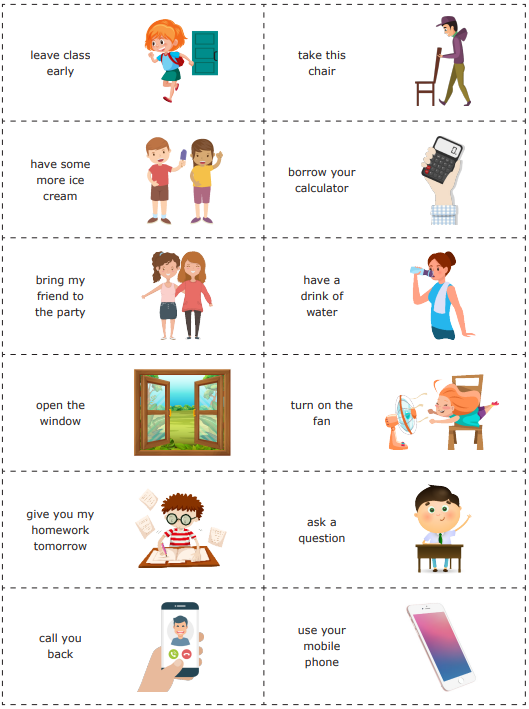
Asking and giving permission
We use can to ask for permission to do something:
- Can I ask a question, please?
- Can we go home now?
could is more formal and polite than can:
- Could I ask a question, please?
- Could we go home now?
may is another more formal and polite way of asking for permission:
- May I ask a question, please?
- May we go home now?
Other possibilities:
- Is it okay if ...?
- Do you mind if ...?
- Would it be all right if ...?
Sample dialogue
A: I was wondering if I could borrow the company van for a fundraiser this weekend.
B: Sure, I think that would be possible. Where is the fundraiser?
A: It is in the park downtown.
B: Would you need it for both Saturday and Sunday?
A: We will need it for Saturday only.
B: I think that would be OK. Who will be driving it?
A: Mary and I will be driving the van.
B: Could you drop it off on Sunday night?
A: Yes, we can do that. Can we borrow the chairs from the lunchroom also?
B: Yes, that would be fine. Just make sure that everything is returned by Sunday night.
https://www.eslfast.com/robot/topics/employment/employment20.htm (audio)
Mum:Can you do the washing-up, please?
You:I'm sorry, I can't. I have to do my homework.
Mum:Oh. Well, go and start your homework now.
You:Mum ... can I go to the cinema with Kerry later?
Mum:Sorry, you can't. You have to do your homework!
You:But I haven't got much homework to do.
Mum:First do the washing-up and your homework!
You:Of course! But can I go out with her after that?
Mum:Mmm ... OK. Yes, you can.
You:Thanks, Mum.
https://elt.oup.com/student/oupesecondary/level03/dialogues/dialogue041?cc=ch&selLanguage=en
Writing
Write a Profile – My Sporting Hero
You are going to write a short profile about your sporting hero in English. This is your chance to introduce someone who inspires you because of their talent, hard work, or success in sport.
Your task:
Write 3 short paragraphs (around 60–80 words each). Make sure you include all the points below:
Paragraph 1: Describe the Hero
-
Name
-
Age
-
Hometown or country
-
The sport they play
Paragraph 2: Why is she/he famous?
-
What kind of person is your hero?
-
What have they achieved? (trophies, records, medals…)
-
Why are they popular or well-known?
Paragraph 3: Why is this person your hero?
-
What skills or qualities do they have?
-
What do you admire about them?
-
How do they inspire you?
Requirements:
- Add a title (e.g. My Hero: Serena Williams)
- Add a photograph of your sporting hero
- Write it digitally (in Word, Google Docs, or similar)
- Use a spell checker
- Use full sentences and correct punctuation.
- Indicate your name, class and date.
Tip: Choose someone you really admire. It can be a famous athlete or a local sports star. Make your profile personal and interesting!
Use of English
Use of English (1-11 Tests)
You Culturalists
Typical Swiss sports
- Swiss wrestling (Schwingen)
- hornussen (between baseball and golf)
- stone throwing (Steinstossen)
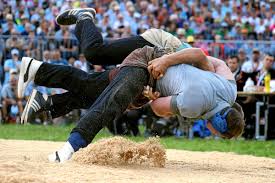
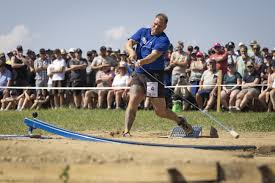
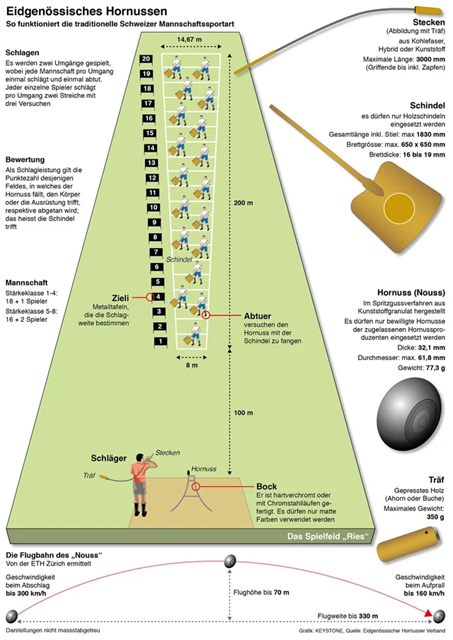
Technical Terms for Hornussen
- a plastic "Nouss" (disk or puck made of plastic, originally made of wood)
- whip-like rod
- raised ramp
- catch boards / wooden
Hornussen - Where the Nouss flies from the ramp and into the playing field.
https://www.swissinfo.ch/eng/swiss-oddities/hornussen-the-swiss-national-sport-with-a-sting/88211213
Games
Guess the Sport
1. It’s a team sport played mainly in the US.
2. It involves a lot of physical contact.
3. Players wear helmets and heavy padding.
4. The field is marked in yards.
5. A touchdown scores 6 points.
It's American football.
Taboo
Describe a given sport in your own words, but your aren't allowed to use these words:
1. 🏈 American football
- touchdown,
- helmet,
- quarterback,
- NFL,
- field,
- tackle
Projects
Profile of a relatively new sport
Task: Research and creatively present a modern sport that was invented after the year 2010.
Create a short profile (6–8 sentences) that includes:
-
Name of the sport
-
Year it was invented
-
Where it started
-
Basic rules or how it’s played
-
What makes it unique or exciting
-
Why you would (or wouldn’t) want to try it
Suggestions for possible sports:
- Teqball: Invented ~2014, Hungary
- Drone Racing: Invented ~2014, Australia
- World Chase Tag: Invented 2012, United Kingdom
- Bossaball: Invented ~2005, Spain/Belgium
- Archery Tag: Invented 2011, United States
- Sporthocking: Invented 2010, Germany
- Crossnet: Invented 2017, Connecticut, United States
- Pickleball: Rising since ~2010s
- Freestyle Scootering: Rising since ~2010s
- Parkour: Invented in late 1980s and early 1990s
- Urban Golf: Invented in 1992, Hamburg, Germany
- Ultimate: Invented in 1968, United States